Dustin Lance Black Goes Back to School with the Homecoming Project: Interview

Tue, 2011-09-27 16:33

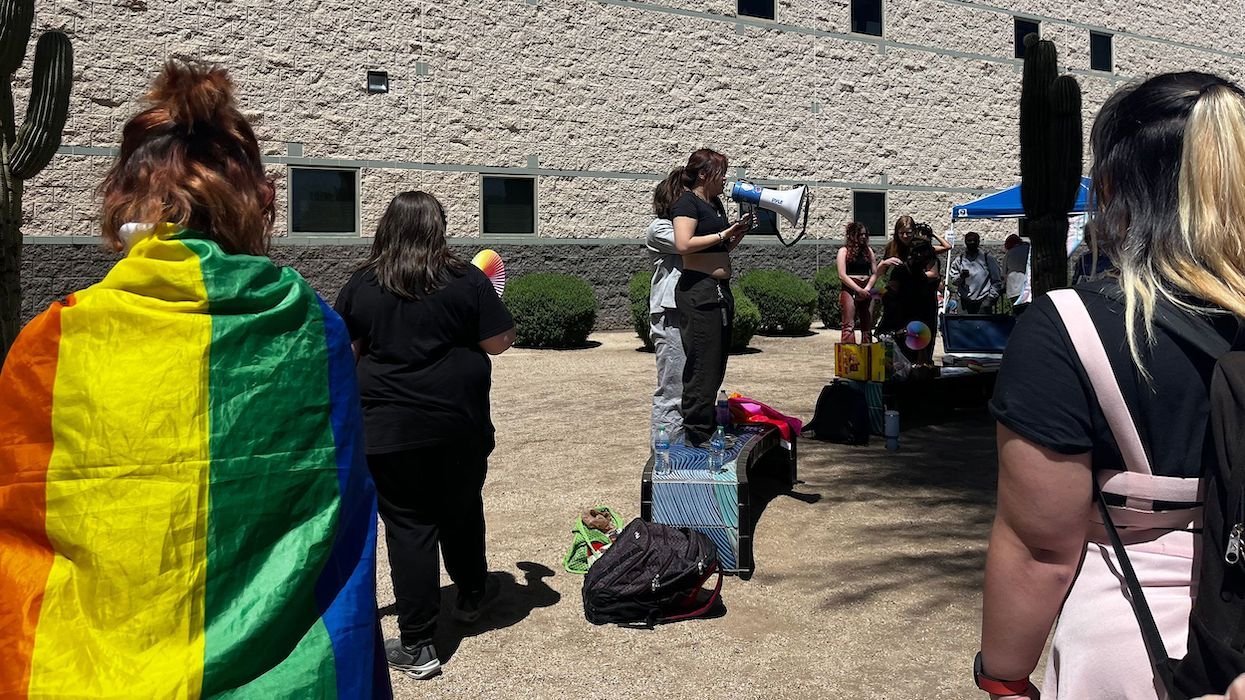
With October around the corner the cyclical truth that summer cannot last forever has probably come home to roost. Labor Day has once again come and gone and for many teens that means they are back in high school. For some, returning to school is something to look forward to with catching up with classmates and attending football games, school dances, and all those other rites of passage that are associated with the glory days of youth. But for LGBT teens high school can be a very difficult time laced with bullying, shame, and fear of being persecuted for their homosexuality.

With October around the corner the cyclical truth that summer cannot last forever has probably come home to roost. Labor Day has once again come and gone and for many teens that means they are back in high school. For some, returning to school is something to look forward to with catching up with classmates and attending football games, school dances, and all those other rites of passage that are associated with the glory days of youth. But for LGBT teens high school can be a very difficult time laced with bullying, shame, and fear of being persecuted for their homosexuality. High school is not easy and it’s even harder for LGBT students who feel they cannot be who they are and that have to hide their truth. Live Out Loud is a non-profit organization seeking to change all that.

Live Out Loud has set out to inspire and empower LGBT youth by connecting them with successful LGBT adults in their community through an initiative called the Homecoming Project. The concept behind this project is simple -- successful LGBT professionals head back to their own high school to tell their success stories to current students.  The purpose is to let students who may be feeling unloved and unsupported about being gay and lesbian know that they are not alone and that there have been people who felt those same feelings many times over before them. By providing positive role models and mentors the Homecoming Project hopes to give support to young LGBT teens that may have no one else to turn to.

One of the most notable past participants of the Homecoming Project includes Dustin Lance Black, the Academy Award-winning screenwriter for Milk and screenwriter of the upcoming Leonardo DiCaprio starrer J. Edgar. Live Out Loud pro­duced a short film that aired on PBS in February of 2011, which documented Black’s experience:

SheWired chatted with Black about his involvement with the Homecoming Project, what it meant to him and why it is so important to get out there and never accept the status quo.

SW: How did you get involved with the Homecoming Project?

Lance Black: Leo (Preziosi) called me up --he runs the Homecoming Project and Live Out Loud. He asked me where I was from and I told him that I went to high school in Salinas, Calif., and he started feeling me out asking what that experience was like and I told him it was an incredibly conservative atmosphere and that most of the students were Catholic, Latino, and it was not particularly accepting, much like any high school really in the early 90’s.

The conversations had not yet begun at that time that would have created an accepting environment for any gay/lesbian kid so my experience was much like most gay and lesbian kids, which was to stay in the closet for safety’s sake. And those that would have figured you out, and of course there were those they did, said things that were negative and would attack you.  And that certainly happened in my high school. It was a tough high school. We had a lot of gang activity. We even had a teacher that was shot my junior year, so it was a place that you knew you had to keep yourself safe. And I think that appealed to Leo as a way we could check in and see how things might have changed and to see if we could create some change in an environment like that. So after thinking about it for a day or two I said, “Sure, I’ll go back to North Salinas High School,” which I had not been back to since the day I graduated.

What were you feeling when you revisited your high school being the man you are today vs. the young man that walked the hallways of that school so many years ago?

I was very nervous going back. I think more nervous because it brought up all the emotions that used to come up whenever I walked through those front doors.  I was always scared to go to school there. I never felt welcomed there. So inevitably those feelings come back up. You see the school, the school colors, you see some of the students hanging out front and you remember when you were one of those students. And you remember what that isolation was that you felt. So those feelings were definitely creeping up as I drove down from San Francisco that day and then approached the front doors of the school. I didn’t know what I was walking into and as much as I knew I was a big grown man now and could take care of myself those fears still crept up.

In your speech to the students that is featured in the documentary, you seem so at ease. At what point from when you arrived at your school did you feel comfortable being there? They kept me pretty isolated from the students right up until I was suppose to speak in front of the entire student body. I guess they decided to cancel the period right before lunch, so they had everyone come into the gymnasium, and it’s a big school so it’s packed with thousands of students and I’m standing in a waiting room outside of the gym. Now this is the gym that I did PhyEd class in everyday, and P.E. is one of those strange testing grounds for the gay and lesbian community, or it was for me (laughs). Anyway, I could hear the thousand of kids and I believe part of the introduction for me was that they played the video of my accepting the Academy Award, and in that, it is pretty clear I’m a gay guy. So I basically came out to that high school in a video before I even entered the room. I could hear the response to that and it seemed really, really positive. And then the moment when they said my name I walked in and thousand of high school kids -- who looked a lot like the kids I went to school with--stood up and gave me a standing ovation, so at that moment I knew I was okay.

More on next page...

READER COMMENTS ()